If I could've met anyone in the texts I would love to have met King Arthur and documented everything going down throughout his life. I mean, yeah, he's fictional, but he had a very dramatic and exciting life. He had a magic sword, was possibly bisexual, and had a huge castle and lots of knights.
I've also read from other sources that a lot of his knights had superhero-like magical powers and that would've been cool to see.
There's just so much drama in his life, like his family, his knights, and his quests. The quest for the Holy Grail is an interesting one I would've liked to follow, as well as his journey to Avalon.
Also, it would be interesting to see how the mythology of the knights began, as history tells that knights were often simply warriors for hire that served a lord, and the nobleness and chivalry was as much of a myth as the story of Arthur.
I also could've went up to Arthur and said "Look, Mordred's...not a great dude. And you probably shouldn't listen to everything Gawain says and needs." Then, we could have more King Arthur adventures...at least for five more minutes before something else equally as terrible happens.
It would just overall be great to be a bystander in one of the most influential and famous founding myths in world history.

Thursday, April 14, 2016

Wednesday, April 13, 2016
Views and Values of Knights throughout Morte d'Arthur
For this blog post I decided to get a scholarly article about the Knighthood throughout our most recent readings, Morte d'Arthur. The author of this post, Robert Kelly, describes the different points of view, from others, about knighthood and the 3 values of knighthood. Kelly states that there are three very different points of views of Knights during this time. "for the exercise of arms, as the ethical code of a governing class, and as an 'order' or vocation to the priests" (106). These views were all throughout the eras of Knights, all throughout the 15th century, and were a result of different situations that were happening. The author also stated different values of knighthood. "The Heroic Knight, who embodies the values of the 'first Christian Warriors', the Worshipful Knight, who embodies 'the more secular values of late medieval feudalism', and the True Knight, who embodies the 'values of the Christian feudalism of the High Middle Ages'"(106).
My question for you, is that while seeing the descriptions of the Knights which do you believe the Knights, such as Gawain, Tristram, Lancelot, and the other Knights are perceived as?
My reaction to this article, is it was very interlude risk and also helped myself with the reading while referring to the Knights. It also took me back to the reading of Sir Gowther, when he was the 3 different colors as being described as the 3 values of Knights. The black as being the Heroic Knight. The red as being the Worshipful knight and the white as being the True knight. Especially the while knight because know he was in his truest and newest form, for now he was pure.
Kelly, Robert L. "Knighthood in the Morte
d'Arthur." South Atlantic Modern
Language Association 53.3 (1988):
105-08. Print.
Another Outlook on Beowulf
I
chose to read an article on Beowulf.
Peter J. Leithart is the
author of this article. He believes so many things that I never thought about
with in Beowulf. A few examples are the fact that Heorot was created for the
enjoyment of man, but also in the likeness of Eden and that angers Grendel,
Grendel as we know is upset because he is an outcast from the others who get to
enjoy Heorot and all it has to offer. When Grendel dies however, his mother’s vengeance
is extremely personal. The men killed her kin, and she will kill theirs. This
read is extremely interesting and I suggest everyone read and see his outlook.
It’s not so much how we discussed in class about Grendel’s anger for Heorot is
not just because he is outcasted, but because of the noise they make, and all
Grendel knew was what he was raised in, which was swampy-grossness. He gives a
different but interesting spin. I’d like to know everyone’s thoughts on his
outlook.
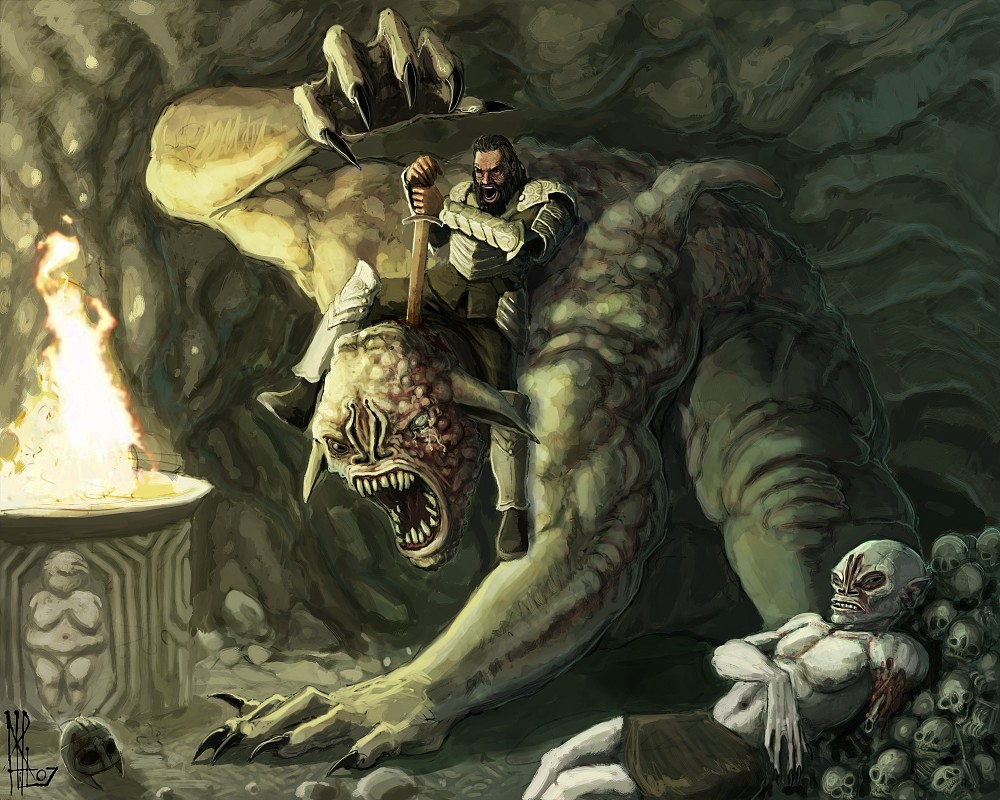
I found this picture extremely interesting.
https://www.google.com/search?q=images+of+beowulf+and+grendel&biw=1051&bih=501&tbm=isch&imgil=H8WN9Xj3uG5TqM%253A%253Bn4Xspw30SFw3iM%253Bhttps%25253A%25252F%25252Fwww.awesomestories.com%25252Fasset%25252Fview%25252FGRENDEL-S-MOTHER-Beowulf&source=iu&pf=m&fir=H8WN9Xj3uG5TqM%253A%252Cn4Xspw30SFw3iM%252C_&usg=__bshcZkl1hoPZ4YE_1E9otcbV9MA%3D&ved=0ahUKEwj_xa-F14zMAhUkvIMKHbNSD6wQyjcIMQ&ei=c8oOV7_AKqT4jgSzpb3gCg#imgrc=H8WN9Xj3uG5TqM%3A
Sunday, April 10, 2016
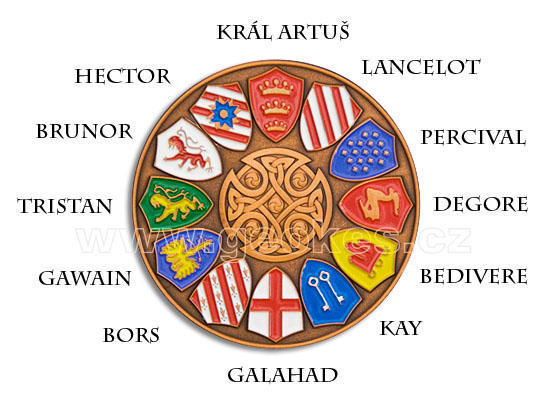
The Round Table
The Knights of the round table is a basic blue print to how forms of government, fraternities, and other organizations are structured. Each Knight at the round table had a specific job that they were suppose to take care of and report back to the table to let the others know what was going on. Governments and fraternities today operate on the same principles, which shows how much things have not changed over thousands of years. The round table is a good system since it allows for different minds to work together to be able to come to a decision based on a group instead of one person just making a decision. The round table is one of the first democratic styles of decision making, and ahead of its time.
My question to my fellow bloggers is how do you feel about this comparison, and does it make you think that the old say "if its ain't broke don't fix it" applies to the comparison?
Saturday, April 9, 2016
Vindolanda
Greetings Medieval Classmates,
Today's little history lesson comes from the early end of the Medieval period in the early 5th century. Follow me down the very straight Roman paved roads of England, towards Hadrian's Wall in the Northern part of the country. This is where we will find Vindolanda. Vindolanda is trading village that was frequented by many different types of people: Roman soldiers, French, Irish and Denmark tradesmen. Vindolanda was not just a regular pit stop or bump in the road; it was actually a thriving fort city.
Because there was a lot of Roman influence over much of the structure and building of the fort, there was a lot of advanced technology at play. For example, there were pipes running underneath the fort allowing water to be brought in through the aqueduct system the Romans installed. Also found in Vindolanda, tablets that helped archaeologists learn what the people of Vindolanda ate shopped for. These tablets were made of fine wood that have grocery lists and things of the like imprinted on them. Vindolanda was considered a metropolis of action and from its size it's easy to why.
Hope you all enjoyed this little history lesson!
Vindolanda Knowledge: History 280, History of the British Isles with Dr. Welsh.
Picture: https://www.google.com/search?q=vindolanda&espv=2&biw=1366&bih=667&source=lnms&tbm=isch&sa=X&sqi=2&ved=0ahUKEwjHtvOkl4PMAhWKbD4KHfkNCvYQ_AUIBygC#imgrc=HmcVNU7azueKbM%3A

Today's little history lesson comes from the early end of the Medieval period in the early 5th century. Follow me down the very straight Roman paved roads of England, towards Hadrian's Wall in the Northern part of the country. This is where we will find Vindolanda. Vindolanda is trading village that was frequented by many different types of people: Roman soldiers, French, Irish and Denmark tradesmen. Vindolanda was not just a regular pit stop or bump in the road; it was actually a thriving fort city.
Because there was a lot of Roman influence over much of the structure and building of the fort, there was a lot of advanced technology at play. For example, there were pipes running underneath the fort allowing water to be brought in through the aqueduct system the Romans installed. Also found in Vindolanda, tablets that helped archaeologists learn what the people of Vindolanda ate shopped for. These tablets were made of fine wood that have grocery lists and things of the like imprinted on them. Vindolanda was considered a metropolis of action and from its size it's easy to why.
Hope you all enjoyed this little history lesson!
Vindolanda Knowledge: History 280, History of the British Isles with Dr. Welsh.
Picture: https://www.google.com/search?q=vindolanda&espv=2&biw=1366&bih=667&source=lnms&tbm=isch&sa=X&sqi=2&ved=0ahUKEwjHtvOkl4PMAhWKbD4KHfkNCvYQ_AUIBygC#imgrc=HmcVNU7azueKbM%3A
Friday, April 8, 2016
I'd Most Want to Meet.....
Hello medieval bloggers,
I am a little late on my post, but Spring Break sort of messed up my schedule and I got a little confused, but better late than never.
I am doing my post this week on a character that I would like to meet. We have started to read stories from the Arthurian time period and after the in class presentation about King Arthur's court, I think the one person I would want to meet from that court is Queen Guinevere.


https://www.google.com/search?q=queen+guinevere&biw=1280&bih=923&tbm=isch&tbo=u&source=univ&sa=X&ved=0ahUKEwjF6pSm5f_LAhUW7GMKHZ65AfsQsAQIGw&dpr=1#imgrc=okGXCAz3mvCiTM%3A
Based off of the readings that we have done in class, it seems like she maybe wasn't the nicest person in King Arthur's court, but maybe we are getting a skewed version of her. I gathered a few facts about her from Encyclopedia.com and found out that she was a beautiful and noble queen, but her love for Sir Lancelot led to her downfall. The site also said that there was numerous fights between Lancelot and Arthur after Guinevere was accused on adultery. After Arthur dies she retrieves to a convent in attempt to reprehend her sins.
Whether or not these stories are true or myth, there is one thing this court has in common with our popular culture today. I don't know about you guys, but I am always interested in watching a good love triangle flourish and then see how it ends. These facts tell us that there was a love triangle between these three characters and it ultimately led to the demise of Arthur's Knightly Court. We can easily get mad at her for committing adultery, but at the same time Kings were able to have mistresses I'm sure. I am not sure if Arthur takes a mistress ever, but I am sure being king he gets a lot of offers.
There are numerous stories that depict her as being beautiful and noble, but there are other texts that make her seem manipulative, betraying, and adulteress. this is why she is a character I would like to meet because I am curious about the accuracy of these legends. She seems like an interesting character and I tend to show more of an interest in queens than I do kings. Don't get me wrong I like studying Kings and their reign, but I think its always nice to study the Queen as well because that is a side that we don't usually read about.
I am a little late on my post, but Spring Break sort of messed up my schedule and I got a little confused, but better late than never.
I am doing my post this week on a character that I would like to meet. We have started to read stories from the Arthurian time period and after the in class presentation about King Arthur's court, I think the one person I would want to meet from that court is Queen Guinevere.
https://www.google.com/search?q=queen+guinevere&biw=1280&bih=923&tbm=isch&tbo=u&source=univ&sa=X&ved=0ahUKEwjF6pSm5f_LAhUW7GMKHZ65AfsQsAQIGw&dpr=1#imgrc=okGXCAz3mvCiTM%3A
Based off of the readings that we have done in class, it seems like she maybe wasn't the nicest person in King Arthur's court, but maybe we are getting a skewed version of her. I gathered a few facts about her from Encyclopedia.com and found out that she was a beautiful and noble queen, but her love for Sir Lancelot led to her downfall. The site also said that there was numerous fights between Lancelot and Arthur after Guinevere was accused on adultery. After Arthur dies she retrieves to a convent in attempt to reprehend her sins.
Whether or not these stories are true or myth, there is one thing this court has in common with our popular culture today. I don't know about you guys, but I am always interested in watching a good love triangle flourish and then see how it ends. These facts tell us that there was a love triangle between these three characters and it ultimately led to the demise of Arthur's Knightly Court. We can easily get mad at her for committing adultery, but at the same time Kings were able to have mistresses I'm sure. I am not sure if Arthur takes a mistress ever, but I am sure being king he gets a lot of offers.
There are numerous stories that depict her as being beautiful and noble, but there are other texts that make her seem manipulative, betraying, and adulteress. this is why she is a character I would like to meet because I am curious about the accuracy of these legends. She seems like an interesting character and I tend to show more of an interest in queens than I do kings. Don't get me wrong I like studying Kings and their reign, but I think its always nice to study the Queen as well because that is a side that we don't usually read about.
Thursday, April 7, 2016
Wars of the Roses
As mentioned in class, our lovely writer of Morte de Arthur fought in the wars of the Roses, which was fought between the Lancasters and the Yorks.
As with all wars, its origins are complicated but this was a family war. Both sides made their claims for the throne descendants of the sons of Edward III. The man originally fought against in the beginning of the wars was Henry VI. He was married to a power-hungry French woman, his just as ambitious council mainly ruled for him and he was prone to fits of madness. Not the most stable king, a York rebellion set out to at least put his ambitious wife back in line after Henry temporarily returned to stability which lead to a victory for York but did not last for long. Eventually, the queen, Margaret of Anjou, gathered an army to prepare to attack the York's. The York's anticipate her and are able to depose Henry and install Edward IV as king.
Edward also comes with, what the English come to believe anyway, a very problematic wife, Elizabeth Woodville. Elizabeth is a problem for several reasons: 1) she's almost a commner/very low level gentry at best 2) she is ambitious 3) her mother was best friends with the previous queen, Margaret of Anjou 4) her mother was considered a witch 5) she herself was considered a witch. These last two reasons were the Lancastrian (as well as the Kingmaker's, Richard of Warwick and eventually York supporters) opinions for how she 1) managed to marry Edward and 2) how she managed to give herself and her family so much power.
Obviously this means another king must be deposed and order restored to the English court.
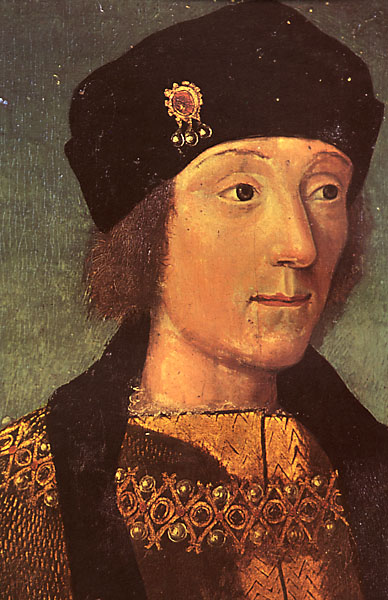
This is a task that takes a lot longer than removing Henry VI and ultimately ends up with the Kingmaker dead but Edward managing to live until the end of his reign. Fighting began again when Edward's brother, Richard III denied his young nephew and Edward's heir the throne ultimately leading to Lancastrian victory. This victory installs Henry Tudor, Henry VII, as King and brings peace by Elizabeth agreeing to marry her oldest child and daughter (also named Elizabeth) to Henry to bring both the families together to end the war.
The wars were named long after they had ended and were named for the color of the roses that represented each of the houses at war:
York = White Rose
Lancaster = Red Rose
 Although, thinking about it now, it seems that the wars were partly due in part because the queens for both Henry VI and Richard IV were ambitious women who wanted to be involved with politics. Of course, in this time period women would not have been allowed to. Perhaps a very small part, but I would like to know what you all think about what the real causes of the wars were besides bad government and ambitious women.
(Source: Britannica)
As with all wars, its origins are complicated but this was a family war. Both sides made their claims for the throne descendants of the sons of Edward III. The man originally fought against in the beginning of the wars was Henry VI. He was married to a power-hungry French woman, his just as ambitious council mainly ruled for him and he was prone to fits of madness. Not the most stable king, a York rebellion set out to at least put his ambitious wife back in line after Henry temporarily returned to stability which lead to a victory for York but did not last for long. Eventually, the queen, Margaret of Anjou, gathered an army to prepare to attack the York's. The York's anticipate her and are able to depose Henry and install Edward IV as king.
Edward also comes with, what the English come to believe anyway, a very problematic wife, Elizabeth Woodville. Elizabeth is a problem for several reasons: 1) she's almost a commner/very low level gentry at best 2) she is ambitious 3) her mother was best friends with the previous queen, Margaret of Anjou 4) her mother was considered a witch 5) she herself was considered a witch. These last two reasons were the Lancastrian (as well as the Kingmaker's, Richard of Warwick and eventually York supporters) opinions for how she 1) managed to marry Edward and 2) how she managed to give herself and her family so much power.
Obviously this means another king must be deposed and order restored to the English court.
This is a task that takes a lot longer than removing Henry VI and ultimately ends up with the Kingmaker dead but Edward managing to live until the end of his reign. Fighting began again when Edward's brother, Richard III denied his young nephew and Edward's heir the throne ultimately leading to Lancastrian victory. This victory installs Henry Tudor, Henry VII, as King and brings peace by Elizabeth agreeing to marry her oldest child and daughter (also named Elizabeth) to Henry to bring both the families together to end the war.
The wars were named long after they had ended and were named for the color of the roses that represented each of the houses at war:
York = White Rose
Lancaster = Red Rose
(Source: Britannica)
Wednesday, April 6, 2016
Reaction to "The Ambiguity Of Wulf And Eadwacer"
In Peter Baker's scholarly journal "The Ambiguity Of Wulf And Eadwacer," he discusses how critics have had difficulty in understanding the meaning of the story in the poem, "Wulf and Eadwacer." Baker writes that "Interpretations multiply and plain places are made rough; the reader, faced with deciding whether the poem is a riddle of a charm, a canine romance or the lament of a woman for her absent lover, may well wonder if he can be certain of anything about it." Baker also points out that Arnold Davidson stated that, "The very fact that the poem can be read in so many different ways suggests that it might be ambiguous and perhaps deliberately so."
In his article, Baker points out that it is commonly accepted that the speaker of this poem is in fact a woman. The reason for this is that the speaker is concerned for Wulf's safety. While this doesn't ensure that the speaker is, the argument can be made that the speaker is concerned for him because they are lovers. A more factually grounded piece of evidence that lies in the text is that in line ten of the poem, the nominative feminine Old English word "reotugu" is used. Baker goes on to say that most critics agree that the speaker is a captive in a foreign land. Wulf is her lover and an outlaw, and Eadwacer is her tyrant husband. Baker concludes however, that it is more likely that Wulf is her husband. He thinks that Wulf has been outlawed by the speakers people and she, because she is the wife of an outlaw, has been sent to live on an island where Eadwacer watches over her and has made love to her. Regardless of Baker's interpretation, the poem is still ambiguous. Baker thinks that this ambiguity is more artistic than it is puzzling and that it justifies the poems reputation as an old English masterpiece.
I took a great interest in this article because I experienced my own struggles in trying to interpret this text when I was writing about it for my midterm paper. There is much that is clearly undefined even in only reading the text as it is provided in our textbook. Despite this however, outside of our textbook there is an even larger debate over what the text is in fact saying, let alone what it means. Considering that this text was written in Middle English, the text needs to be translated into Present Day English for us to understand it. Because of the nature of how languages change over time, many of the words from Middle English no longer exist in today's English and many of the words that do remain now mean something entirely different than what they used to. I was really interested to read that the original Middle English version of the poem contained the feminine nominative word "reotugu" because there was no evidence in the text that we read. I was wondering if the speaker was a man or a woman while I was writing my midterm paper, but was unable to find any concrete evidence for either sex. By understanding this, the theory of Wulf and the speaker being star crossed lovers makes a lot of sense.
Baker's article opened up my understanding of the poem entirely. It's incredible how scholarly discussion furthers all of the parties involved in the conversations understanding of what is going on in a text. If I hadn't taken the time to read Baker's article, my perspective of what is going on in this poem would be much more limited. I'm sure that other scholars helped him understand what was going on in this text before he was able to assert his own detailed interpretation.
Source: Baker, Peter S. "The Ambiguity Of 'Wulf And Eadwacer'." Studies In Philology 78.5 (1981): 39-51. MLA International Bibliography. Web. 6 Apr. 2016.

Source: Baker, Peter S. "The Ambiguity Of 'Wulf And Eadwacer'." Studies In Philology 78.5 (1981): 39-51. MLA International Bibliography. Web. 6 Apr. 2016.
Review of The Medieval Bestiary: Animals in the Middle Ages
Occasionally, when reading medieval texts, I find myself feeling out of the loop in respect to the intended medieval audience. There is always some symbol representing some concept or idea in which a modern audience may not be attune.
If you have noticed, quite a few of the texts we have read use animals as symbols to represent something like traits. From Marie de France to Chaucer: animals are key literary tools. So when you close read and come across a reference to an animal the website, The Medieval Bestiary, is your friend.
All you have to do is type in the animal and search. You can find medieval illustrations, allegories, morals, traits, and other places in medieval literature that the animal is referenced.
Examples:
Marie de France references an eagle in her lai, Lanval in regards to the character, the mysterious lady of the woods. According to The Medieval Bestiary an eagle can represent Christ and rejuvenation or it can represent an evil spirit and a ravisher of souls.
Does that change how you view Lanval's lady love?
In Sir Gowther, Gowther's punishment is to only eat the food that was first in the mouth of a dog. In medieval culture dogs were considered to be faithful creatures who could heal wounds by licking them. This symbolizes "the wounds of sin being healed through confession."
How can we relate this back to Gowther?
In the near future we will be reading the Nun's Priest's Tale. Chaucer loved his animals, in this tale there is a rooster and a fox. I highly recommend you utilize this website while reading.
If you have noticed, quite a few of the texts we have read use animals as symbols to represent something like traits. From Marie de France to Chaucer: animals are key literary tools. So when you close read and come across a reference to an animal the website, The Medieval Bestiary, is your friend.
All you have to do is type in the animal and search. You can find medieval illustrations, allegories, morals, traits, and other places in medieval literature that the animal is referenced.
Examples:
Marie de France references an eagle in her lai, Lanval in regards to the character, the mysterious lady of the woods. According to The Medieval Bestiary an eagle can represent Christ and rejuvenation or it can represent an evil spirit and a ravisher of souls.
 | |
| Retrieved from The Medieval Bestiary. British Library. |
In Sir Gowther, Gowther's punishment is to only eat the food that was first in the mouth of a dog. In medieval culture dogs were considered to be faithful creatures who could heal wounds by licking them. This symbolizes "the wounds of sin being healed through confession."
 |
| Retrieved from The Medieval Bestiary. Kongelige Bibliotek. |
In the near future we will be reading the Nun's Priest's Tale. Chaucer loved his animals, in this tale there is a rooster and a fox. I highly recommend you utilize this website while reading.
Sunday, March 20, 2016
A "Lovely" Wedding Night for Sir Gawain
So here is kind of what I pictured Dame Ragnelle to look like when we were reading.
I made her more into a cartoon character than an actual real person. I put her in undergarments cause that was probably the best way that I could think to do it. Let me know what you think of it and if there's anything you think I could make a little better because I don't think shes perfect but, I think that I got all the qualities that we discussed in class. I also found a picture of food that I could lay behind her since she was able to eat more than any other man.

Saturday, March 19, 2016
Greed in Middle Ages vs Now
According to Laura Stokes from greed was different in the middle ages. In the middle ages it was alright for people to be rich as long as they were not being selfish about it. Being selfish was considered to be wrong. In this article Laura explains that people having "acceptable greed" has changed in the last 500 years.
http://news.stanford.edu/news/2012/august/greed-middle-ages-080212.html

Now on wall street, self promoting behavior is displayed all the time. If people were like this in the middle ages they might have been killed for behaving in that manor. Today being greedy is almost normal. people are constantly wanting to have the best, and receive more money than the person next to them. People today I believe are more boastful. People today want to show off what they have. I think that people wanted to do this in the middle ages but do not because of fear of consequences.
"The heart of the arguments of the people I'm researching," she explained, "are socially indigenous value sets – not from an outside institution" (Laura Stokes 2008).
And, while quite different, "these value sets are present in today's society," said Stokes. Despite a heavy emphasis on greed in modern business culture, we still value social responsibility. As Stokes pointed out, "We admire most our great philanthropists who can balance both" (Laura Stokes).
I found these quotes interesting. I mostly liked the second quote because she explains that indigenous value sets still take place today. I also like that she said we value social responsibility because i believe this to be true today. For example we like the people that can be rich and yet responsible about it. We like these people because they are rich yet know how to balance having money and social responsibility. Let me know what you think about this news journal I found.
Friday, March 18, 2016
Peasants revolt
When one thinks of medieval heroes I would think that Robin Hood, or King Arthur would come to mind. However few who are not well versed in medieval history would think of Wat Taylor and Jack Straw. These were two of the men who lead the Peasants revolt in 1381.
The gist of the story is that the Black Plague killed a whole lot of people. Because of all the peasant deaths many Lords were short on laborers and so they started encouraging peasants to move from their village to seek a better paying job with them. Well it was illegal for peasants to move without their current Lord's permission. She because of the competing between Lords to get the now sparse peasants a bunch of strict laws were made and enforced. These were called the Statute of Laborours.
In addition to that a new poll tax was introduced, and that was absolutely the last straw. So Taylor and Straw and 60,000 men marched on London with a petition to be free basically. They wanted to be able to provide food for their families, make a living wage, and build homes.
It really did not go as planned. King Richard II was 14, but he agreed to talk to them, however he could not get to them in a timely manor, so everyone started rioting. When Wat actually met the King, he was killed, and the rest of the leaders were killed too. Their demands were not met.
I do not know if Taylor and Straw could be considered heroes. They started out with such noble goals, but in the end turned into criminals. They used violence because they were too impatient to see peace work it's magic. I wonder if their demands would have been met if they had not turned violent. We see this kind of thing far too often even in our modern world. Perhaps we should learn a lesson from the Peasant's Revolt.
Source
http://www.medieval-life-and-times.info/medieval-history/the-peasants-revolt.htm
The gist of the story is that the Black Plague killed a whole lot of people. Because of all the peasant deaths many Lords were short on laborers and so they started encouraging peasants to move from their village to seek a better paying job with them. Well it was illegal for peasants to move without their current Lord's permission. She because of the competing between Lords to get the now sparse peasants a bunch of strict laws were made and enforced. These were called the Statute of Laborours.
In addition to that a new poll tax was introduced, and that was absolutely the last straw. So Taylor and Straw and 60,000 men marched on London with a petition to be free basically. They wanted to be able to provide food for their families, make a living wage, and build homes.
It really did not go as planned. King Richard II was 14, but he agreed to talk to them, however he could not get to them in a timely manor, so everyone started rioting. When Wat actually met the King, he was killed, and the rest of the leaders were killed too. Their demands were not met.
I do not know if Taylor and Straw could be considered heroes. They started out with such noble goals, but in the end turned into criminals. They used violence because they were too impatient to see peace work it's magic. I wonder if their demands would have been met if they had not turned violent. We see this kind of thing far too often even in our modern world. Perhaps we should learn a lesson from the Peasant's Revolt.
Source
http://www.medieval-life-and-times.info/medieval-history/the-peasants-revolt.htm
Thursday, March 17, 2016
Pilgrimages to Jerusalem during the Middle Ages
Jerusalem was the city where Jesus died, resurrected, and ascended into heaven, thus it became a city to visit for Christian, especially European Christians. During the Middle Ages, such a pilgrimage was expensive and lengthy. Many of these pilgrimages were by boat and often treacherous because boats often got lost and/or shipwrecked. There were many poems even written about how treacherous and often terrible the journey itself (Such as The Pilgrims Sea-Voyage and Sea-Sickness).
One interesting fact is that once travelers reached Palestine, the supervision was transferred into the Franciscans of the Monastery of Mount Zion, and it was the only Catholic organisation that was allowed by the Islamic rulers at the time.
One interesting fact is that once travelers reached Palestine, the supervision was transferred into the Franciscans of the Monastery of Mount Zion, and it was the only Catholic organisation that was allowed by the Islamic rulers at the time.
There were many reasons to take the dangerous voyage to Jerusalem. Many reasons were to see the holy land and see the place where Jesus died for Christian's sins, as well as for the adventure and curiosity to see a city that so many considered holy and righteous in and of itself. Also, non-saint souls, according to Medieval Christianity, stay in Purgatory for a period of time before ascending into heaven. Pilgrimage to Jerusalem was said to shorten the time in Purgatory for the souls of the dead and for those who took the journey.
Some were sent to Jerusalem as punishment. They were sent to seek penance, but only for severe crimes, so it wasn't common.
Social status and prestige was another (probably less holy) reason. Those who accomplished the journey and returned were held in higher regard socially. Knights were often encouraged to go to show off their knight-hood and encourage them into crusades. Nobles were most often pilgrims because of the cost of the journey, most of whom being men. Women were considered the 'more sinful of sexes' and 'inherently sinful' (there was long debate in the Catholic church whether women even possessed souls to ascend to heaven). They were allowed so long as they were quiet, but most were quiet anyway because the journey was so difficult anyway.
Sources:
http://memo.hum.uu.nl/jerusalem/pages/pilgrimage.html
https://edelmulcahy.wordpress.com/
Wednesday, March 16, 2016
Drawing of Dame Ragnell
I decided to take up Dr. Mann's offer of a drawing of our hideous maiden Dame Ragnell. I am no artist but I tried to accurately depict the traits of her that we discussed in class. Hope you all enjoy it! 
Monday, March 14, 2016
U.S. Politics Is Returning to the Middle Ages
As many of you know Donald Trump is running in the 2016 presidential race. In the beginning of the article the author states that Trump provides viewers with showmanship and theatrics, which relates to the plays and spectacles that we just learned about in the town of York. While we were studying the Crucifixion, Dr. Mann showed us an example of how this story would have been played out on the streets by actors in order to entertain the audience. Is Trump possibly doing the same by using theatrics to win voters?
Trump also stated, "All I know is this: We're living in Medieval times." "We're living in an unbelievably dangerous and horrible world."
Gini Graham Scott explored Trump's statement and attempted to answer the question of, "Is the violence and economic inequality that pervades the world today analogous to the peasant uprisings and rampant warfare many associate with the Middle Ages?"
In her new book, "The New Middle Ages," Scott compares our country's widespread economic inequality to what was seen hundreds of years ago in Europe. She studied numerous television shows that dealt with the middle ages, the Tudors, and monarchies and noticed how the wealthy lifestyle was being portrayed in regards to the lives that peasants were living at that time. An example that Scott used to explain this inequality is the Kardashian family. We all know that this family is very wealthy and we even get to see how they live because they have an entire show on the E network. The people living these lavish lifestyles seem to be running the conversations we have and with full access to the Internet, we are able to see how different these people live from others who don't have as much money as the Kardashian family does.
Through social media, television, and the news we can clearly see how "the other half" lives in our world. They have lavish lifestyles, drive expensive cars, live in mansions, and they have people who work for them. While the other half of society may have to use public transportation to get place to place or may not be so fortunate to have a roof over their head. I took this article and related it to "The Wedding of Sir Gawain and Dame Ragnelle." In order to win Sir Gromer's challenge King Arthur must find out what women desire most. When he decides to give up he encounters Dame Ragnelle and because she isn't beautiful, King Arthur has his nephew marry her so he can win Gromer's challenge. This example clearly shows that the king used his power over his nephew in order to get his way.
My question for everyone is, Do you think our society's economic equality match those of the middle ages? Why or why not? I am very curious to hear your thoughts! The link to the full article is provided below.


Scott said she studied Tudor history to help show how lavish lifestyle was for the royals in the middle ages. Here is Hampton Court Palace where King Henry the eighth liked to spend most of his time!
http://www.usnews.com/news/the-report/articles/2015/11/19/us-politics-is-returning-to-the-middle-ages
Trump also stated, "All I know is this: We're living in Medieval times." "We're living in an unbelievably dangerous and horrible world."
Gini Graham Scott explored Trump's statement and attempted to answer the question of, "Is the violence and economic inequality that pervades the world today analogous to the peasant uprisings and rampant warfare many associate with the Middle Ages?"
In her new book, "The New Middle Ages," Scott compares our country's widespread economic inequality to what was seen hundreds of years ago in Europe. She studied numerous television shows that dealt with the middle ages, the Tudors, and monarchies and noticed how the wealthy lifestyle was being portrayed in regards to the lives that peasants were living at that time. An example that Scott used to explain this inequality is the Kardashian family. We all know that this family is very wealthy and we even get to see how they live because they have an entire show on the E network. The people living these lavish lifestyles seem to be running the conversations we have and with full access to the Internet, we are able to see how different these people live from others who don't have as much money as the Kardashian family does.
Through social media, television, and the news we can clearly see how "the other half" lives in our world. They have lavish lifestyles, drive expensive cars, live in mansions, and they have people who work for them. While the other half of society may have to use public transportation to get place to place or may not be so fortunate to have a roof over their head. I took this article and related it to "The Wedding of Sir Gawain and Dame Ragnelle." In order to win Sir Gromer's challenge King Arthur must find out what women desire most. When he decides to give up he encounters Dame Ragnelle and because she isn't beautiful, King Arthur has his nephew marry her so he can win Gromer's challenge. This example clearly shows that the king used his power over his nephew in order to get his way.
My question for everyone is, Do you think our society's economic equality match those of the middle ages? Why or why not? I am very curious to hear your thoughts! The link to the full article is provided below.
Scott said she studied Tudor history to help show how lavish lifestyle was for the royals in the middle ages. Here is Hampton Court Palace where King Henry the eighth liked to spend most of his time!
http://www.usnews.com/news/the-report/articles/2015/11/19/us-politics-is-returning-to-the-middle-ages
Sunday, March 13, 2016
Medieval influences on fairytales?
As I was reading “The Wedding of
Sir Gawain and Dame Ragnelle,” I became extremely interested in the Dame and
her story and how I recognized some of the traits she portrays and things that
are described in the story and related them to some fairytale’s we have in
today’s society. The way she is described as something extremely unattractive
yet, she has all the insight the King needs to survive if he gets Sir Gawain to
marry her, kind of like how Ursula the sea witch from Ariel says if Ariel gives
Ursula her voice, she will make her human. Dame Ragnelle gets married to Sir
Gawain and when they do their ‘marriage activities,’ she becomes beautiful. Sort
of like how in Snow White and the 7 Dwarfs, the prince has to kiss Snow White
to wake her from the sleep she is cursed into. The fact that Dame Ragnelle
would stay beautiful for him from dusk until dawn forever, because he gave her
the CHOICE to choose when she wanted to be beautiful, is a very uncommon thing
to do during this time because women didn’t have much choice of anything. Even
though, he originally married her because he was loyal to the King and wanted
nothing more than to have his king survive, it turned into something more
beautiful than that. This sounded to me like Beauty and the Beast when Belle
goes to rescue her father from the jail and bamb Belle gets locked away in the
castle with the Beast! Here comes the invention of my most favorite fairytale.
I feel as if there is a lesson to be learned
from the Dame and one basic life lesson/saying that I’m sure everyone has heard
is “Don’t judge a book by its cover.” I feel as if this was a lesson, as the
reader, we were to take away from the story. Does that saying really date that
far back? This is also something we see in the Disney tale of Beauty and the
Beast! Say What? Except, in Beauty and the Beast, clearly the Beast is the male
figure. We rarely see women portrayed as the “ugly one”.
What exactly is her goal in this
story? Is it as innocent as giving the king his answer to survive? Or, is it as
selfish as to getting the curse lifted that her evil step mother placed on her?
Some of these aspects we also see in Snow White and Cinderella! Snow White is
cursed by eating an apple, and Cinderella is turned into her stepmother and
stepsister’s slave practically and marries the prince; turning her from a maid
into royalty—rags to riches type thing, (Ragnelle even has the word rag in it,
coincidence? I think not) similar to how Sir Gawain’s actions change Dame
Ragnelle into something more beautiful than he ever imagined possible. It’s like Walt Disney took some of the characters
from the Medieval writings and created different versions of them! I thought it
was a farfetched idea that maybe, just maybe these fairytales’ we see today
didn’t always have a happy ending. Anyone else have thoughts on that? Tell me
guys, how far out of the box did I go?
Saturday, March 12, 2016
Lanval: What is he doing with his life?
In class on Thursday (March 10th) there was a lot of talk about the maiden that Lanval falls in love with, but there was not a whole lot of talk about the man himself. There really did not seem to be much in the way of interest about Lanval, but looking closer at him, he is the Ideal Man. Not only is he desired by a beautiful, wealthy woman, making him the envy of men, but he is also the ideal man for women as well. Lanval knew that his lady did not want him to speak about her and while he did slip up, he was only complimenting her beauty. Lanval stays loyal to his lady and turns down the queen. Even while imprisoned he remains loyal to his lady.
While there was a lot of discussion about Lanval's mistress, he was glossed over, but why? Lanval is loyal, supposedly good looking and he is not poor, but he is not interesting. I found it quite interesting that there was not a lot of talk about him because he didn't have any lasting drama. The king, queen and the maiden all were embroiled in their own schemes and plans that Lanval was forgotten because all he could do was sit in jail. The idea that the perfect man was not quite enough to even keep Marie de France's focus is also interesting. Lanval is supposed to be the knight in shining armor, but he is the one that needs saved; he needs other people's drama and turmoil to make himself exist.
No wonder the king left him out of the gifting hour.
Enjoy these comic strips as much as I did.
Images found at: http://litbrick.com/comic.php?date=2010-05-06


While there was a lot of discussion about Lanval's mistress, he was glossed over, but why? Lanval is loyal, supposedly good looking and he is not poor, but he is not interesting. I found it quite interesting that there was not a lot of talk about him because he didn't have any lasting drama. The king, queen and the maiden all were embroiled in their own schemes and plans that Lanval was forgotten because all he could do was sit in jail. The idea that the perfect man was not quite enough to even keep Marie de France's focus is also interesting. Lanval is supposed to be the knight in shining armor, but he is the one that needs saved; he needs other people's drama and turmoil to make himself exist.
No wonder the king left him out of the gifting hour.
Enjoy these comic strips as much as I did.
Images found at: http://litbrick.com/comic.php?date=2010-05-06
Thursday, March 10, 2016
Reaction to Lanval
One of the things I enjoy about the Marie de France stories is that they are very character driven. On my initial read I actually liked Lanval as a character and did not get this sense of naivety that others were suggesting but I did get a huge sense of neglect. However, I never really saw that naivety but I did see a lot of loneliness in his character and that lead me to imagine him as a better person for several reasons. Lanval was described as having great skills, beauty and courage but also for his generosity. This is quite the opposite characteristic that we’ve seen of most of the men in the readings so far. Most of the men so far have been braggarts and very interested in improving their own lives standing. Then there is Lanval who is generous, which would mean he is humble. He does not even ask the king for rewards, which does make him sad but he never asks which suggests there is a part of him that believes he does not outright worthy enough to receive rewards. He would prefer them freely given by those who do see him worthy (namely Arthur who forgets about him) which is exactly what he gets with the maiden.
Which I think is where the argument that he is naive comes from. Logically, if a maiden just appears from nowhere knowing things impossible for her to know and asking for secrets to be kept said maiden shouldn't be trusted. However, Lanval is a lonely character; I honestly don't think he would have known better as he had no one else that really cared for him throughout the entire story. Even when he misspoke to the queen, he did it to defend himself and even at that he had to be provoked into defending himself. He might be naive, but it seems to have more to do with not having anyone to guide him in the right direction rather than just an overall character trait.
Which I think is where the argument that he is naive comes from. Logically, if a maiden just appears from nowhere knowing things impossible for her to know and asking for secrets to be kept said maiden shouldn't be trusted. However, Lanval is a lonely character; I honestly don't think he would have known better as he had no one else that really cared for him throughout the entire story. Even when he misspoke to the queen, he did it to defend himself and even at that he had to be provoked into defending himself. He might be naive, but it seems to have more to do with not having anyone to guide him in the right direction rather than just an overall character trait.
Wednesday, March 9, 2016
The Anchoress
Since we only briefly talked about
being an anchoress in class, I wanted to do some more research on who exactly
they were and why they chose to live in such conditions rather than in
religious communities.
I found out that anchoress’ lived in
extreme poverty and usually ate only vegetarian food. Since their lives are
devoted to God, similar to a nun or monk, most of their day is spent praying
and giving advice to people who come seeking it. These women were seen to the
public as people who gave advice and were willing to pray for and with the
people who came to see them.
Since arranged marriages were such a
large part of the cultural norm at this point, I believe many people chose to
be anchoress’ to avoid marrying someone who was being forced upon them.
This is the picture I found online of the rooms the anchoress live in.

Does anyone else have any ideas of why these people would want to live here instead of in abbeys or monasteries?
Reflection on The York Crucifixion
While reading The York Crucifixion all I could do was think about how awful everything that was going on was. I am familiar with the story about how Christ was put up on the cross,but this made the story much more in detail than I remember when I first heard about it. The way that the story goes into detail about all the little things that the soldiers did when they were getting him ready gives you a very vivid image in your mind. While reading the parts about how they were stretching his body to get him where they needed to nail his hands in made me cringe. This reading also shows how kind and forgiving the son of God is, he prayed for these soldiers 3 times, he wanted to show them that even after all they had put him through they could still be forgiven and be in heaven with him. This would be an example that someone who was teaching about Christianity would want to tell to people. It would give them a way to show that even the best people are put through trials, these trials are what show who is worthy and who is not. It could be a way to justify if something bad has happened in a persons life and that was what was keeping them from following someone who is supposed to be protecting them from all the bad in life.


Subscribe to:
Posts (Atom)